高中英語聽力測驗 · 40 題
大學入學考試中心 高中英語聽力測驗 試題示例 3
大學入學考試中心公開的高中英聽試題示例與參考試卷,附整卷音檔和逐字稿。
試題來源:大學入學考試中心公開試題,音檔與題目著作權屬原單位。逐字稿由 Loopy 整理,本頁僅供學習使用。
整卷音檔
第一部分:看圖辨義(單選)
第 1 題
- A
- B
- C
- D
看逐字稿
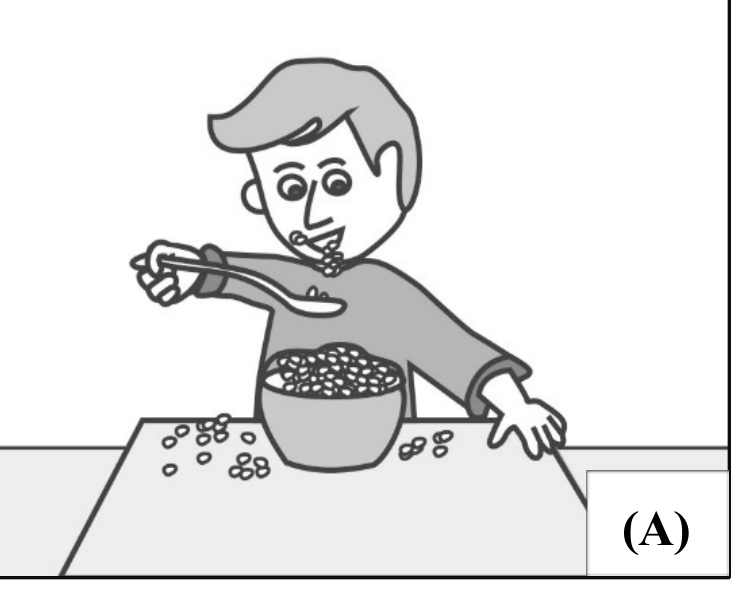
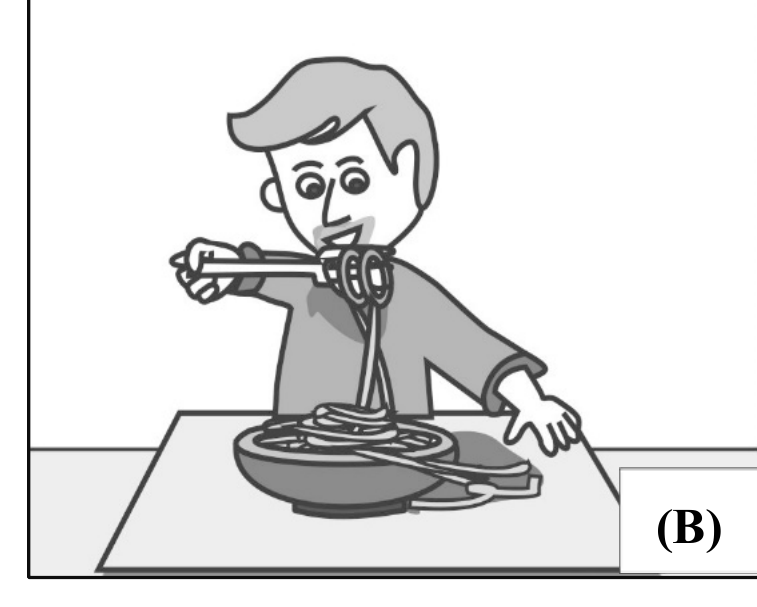
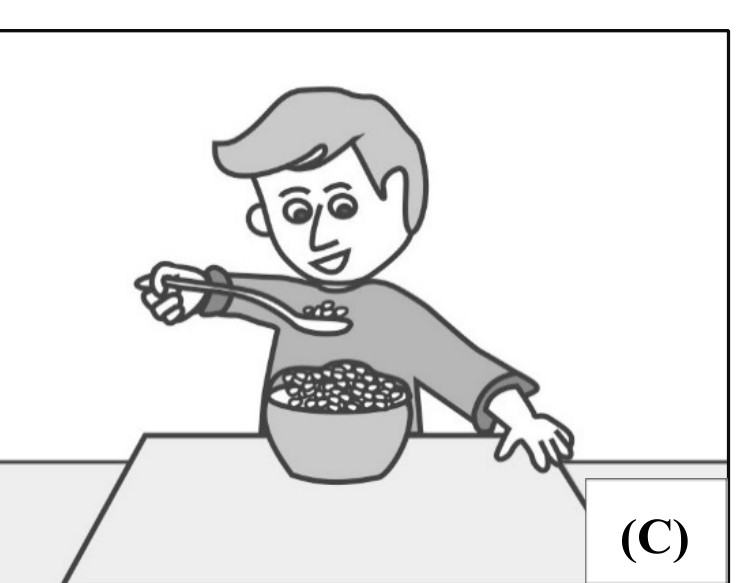
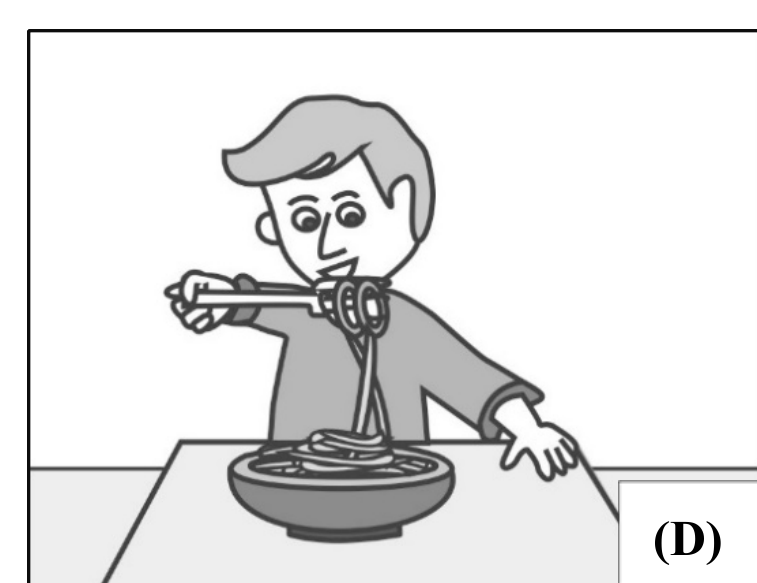
question one, please look at the four pictures. Question one. A man is trying to eat a bowl of spaghetti. Some of it has fallen onto the table. For question
中文翻譯
第一題,請看這四張圖片。第一題。有一名男子正試著吃一碗義大利麵,有些麵掉到了桌子上。針對問題……
- A
第 2 題
- A
- B
- C
- D
看逐字稿
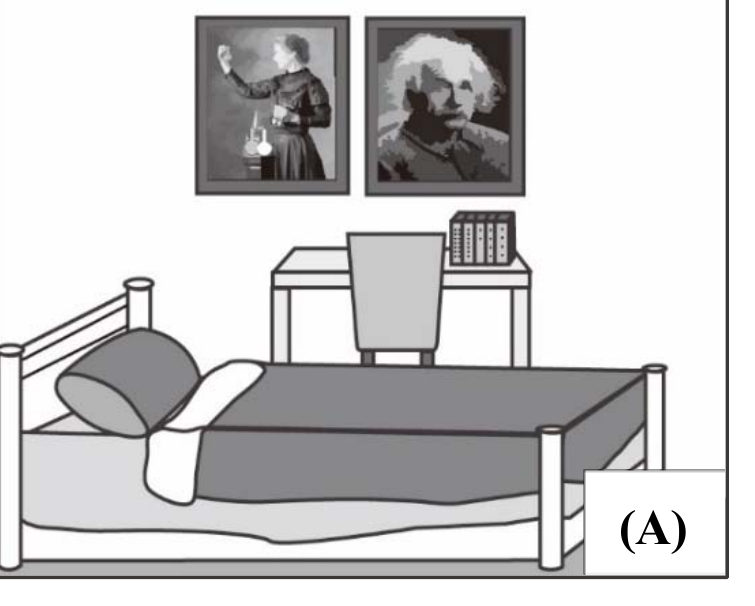
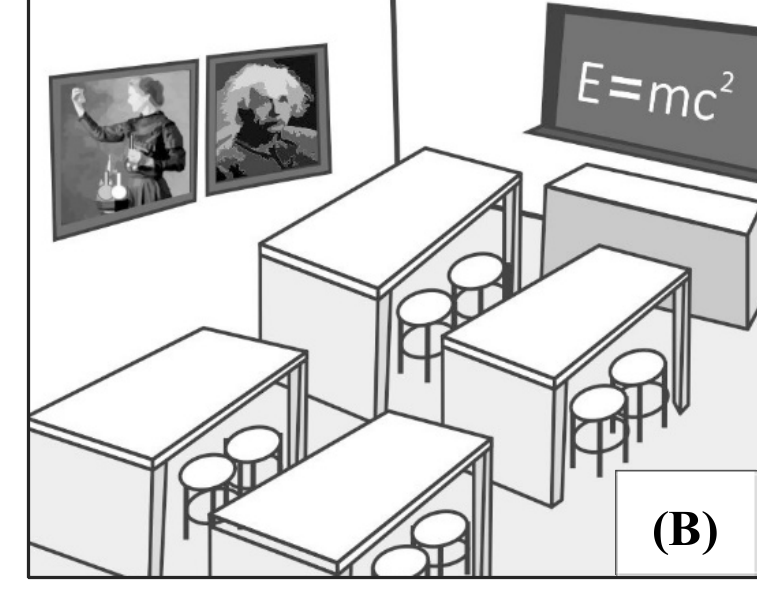
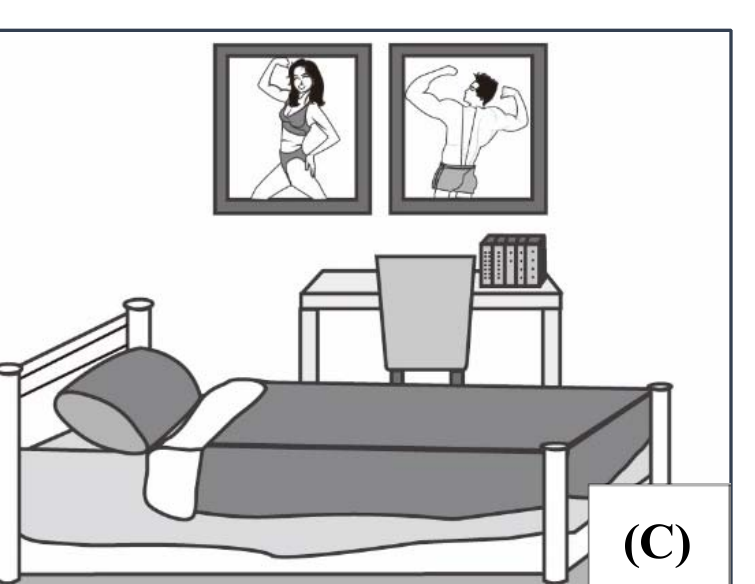
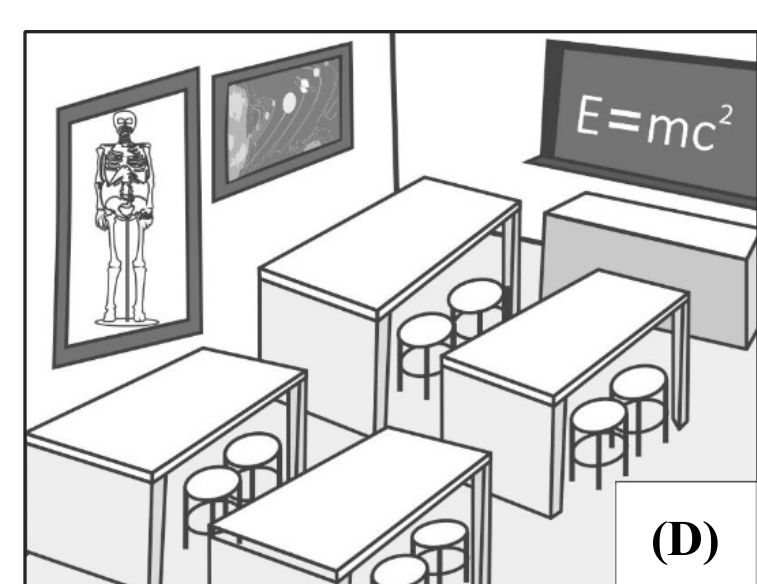
two, please look at the four pictures. Question two. This is Mary's dorm room. She has posters of scientists she admires on the wall. For
中文翻譯
第二題,請看這四張圖片。第二題。這是瑪麗的宿舍房間。她的牆上貼著她所景仰的科學家海報。至於……
- A
第 3 題
- A
- B
- C
- D
看逐字稿
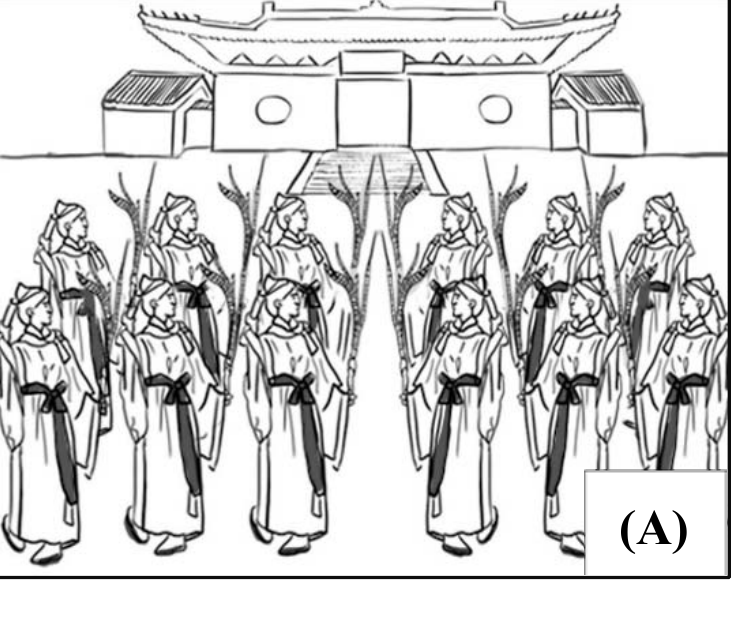
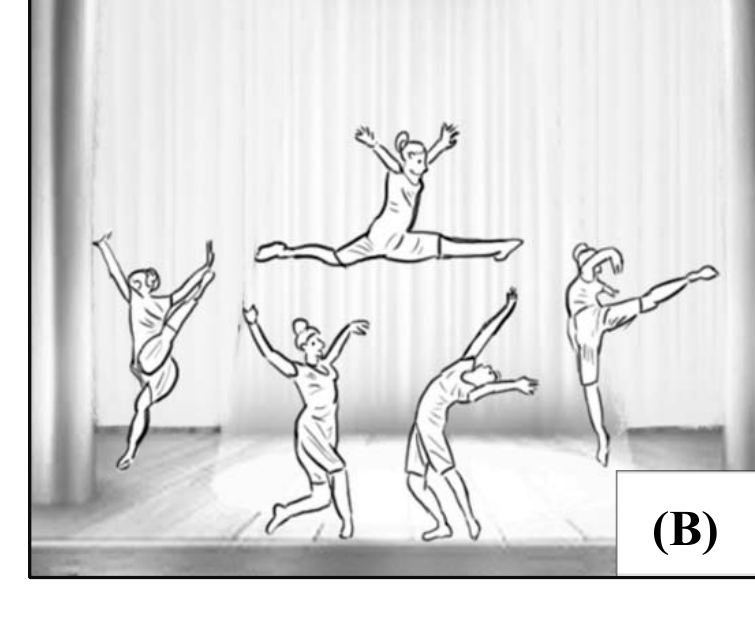
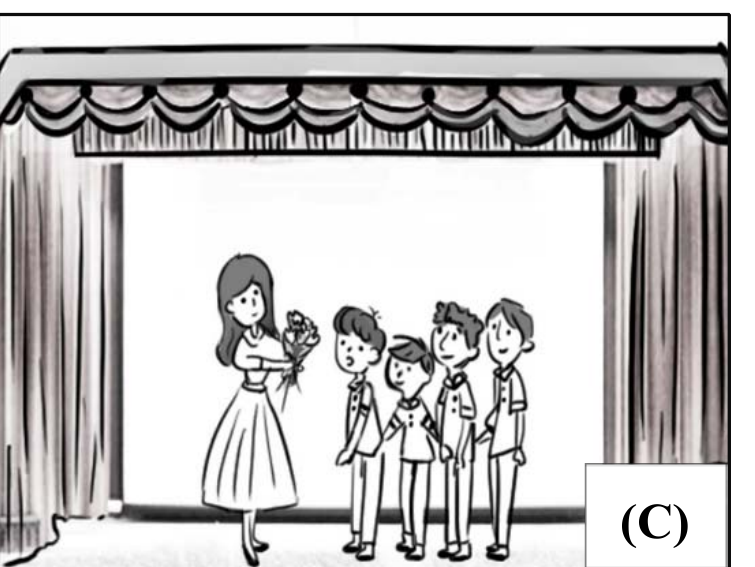
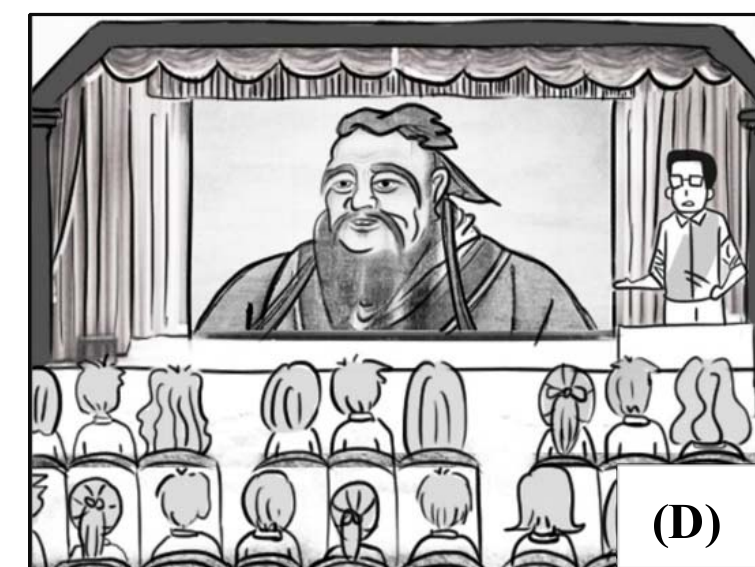
question three, please look at the four pictures. Question three. The students are dressed in traditional Chinese costumes. They are performing a special dance called on Teachers' Day. For question
中文翻譯
第三題,請看這四張圖片。第三題。學生們穿著中國傳統服飾。他們正在表演一種在教師節時跳的特別舞蹈。關於第三題……
- A
第 4 題
- A
- B
- C
- D
看逐字稿
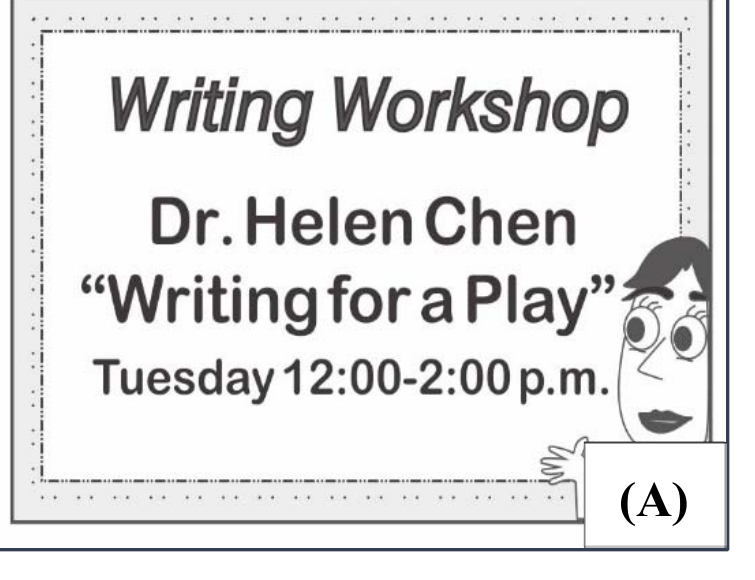
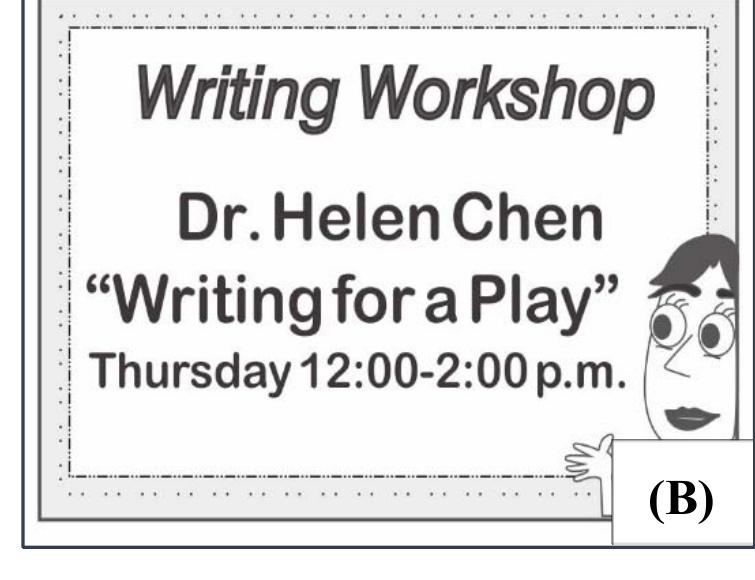
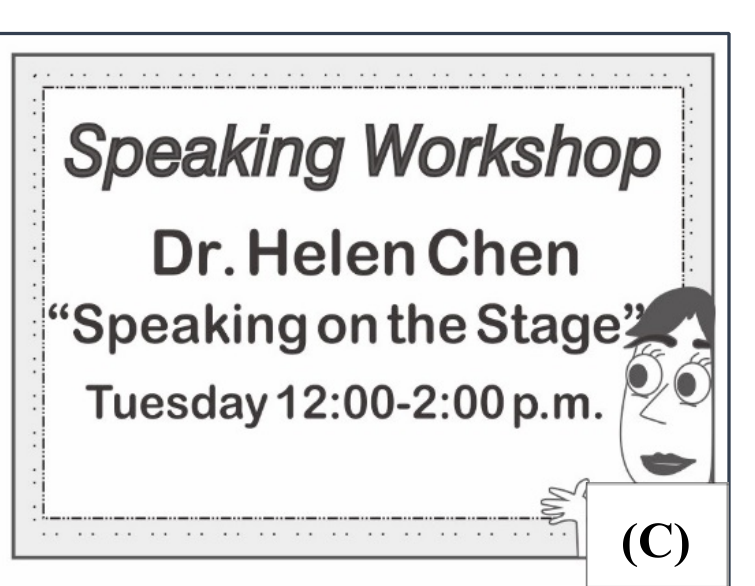
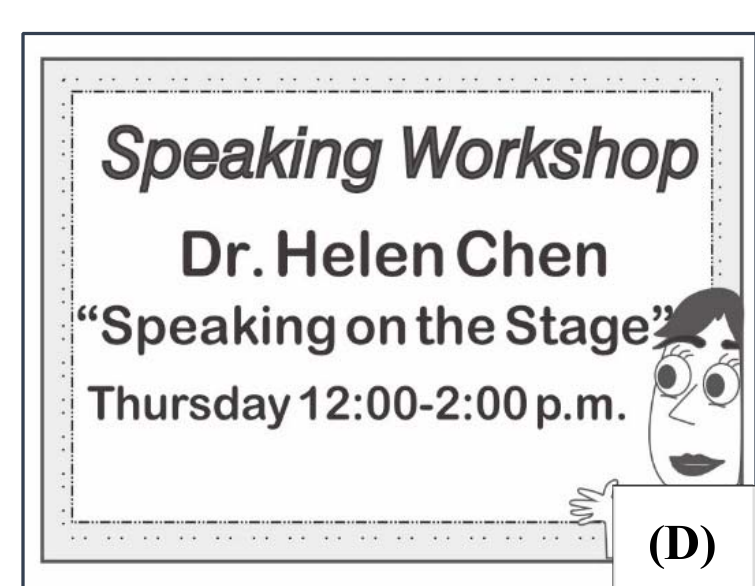
four, please look at the four pictures. Question four. Doctor Helen Shen is going to speak at our workshop this Thursday at noon. She's going to talk about how to write for a stage play.
中文翻譯
第四題,請看這四張圖片。第四題。沈海倫博士將於本週四中午在我們的工作坊上演講。她將分享如何撰寫舞台劇劇本。
- A
第二部分:看圖辨義(多選)
第 5 題 (複選)
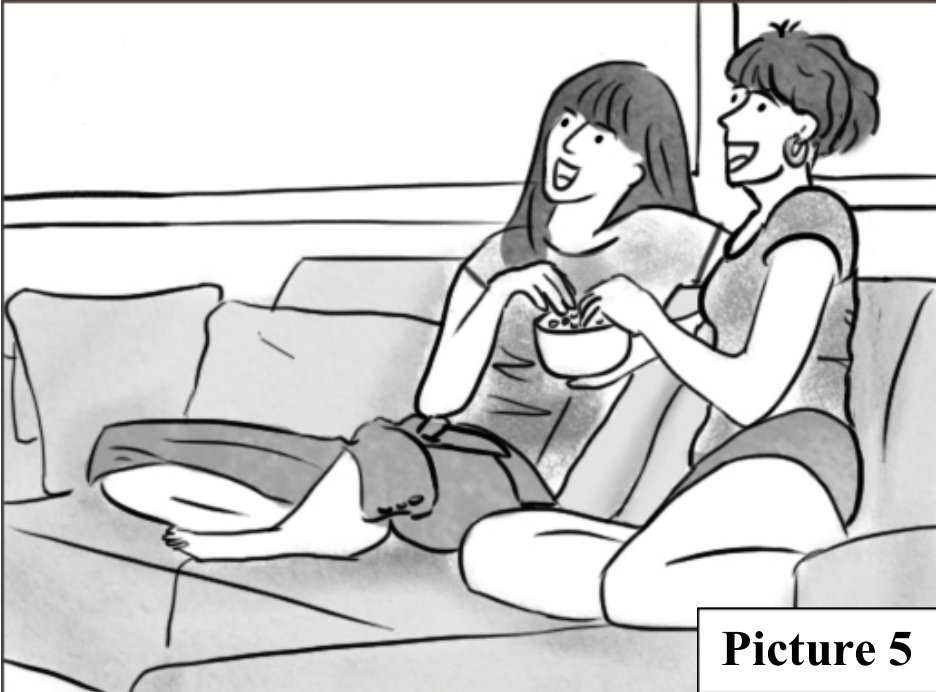
看逐字稿
five, please look at picture five. Question five. Which two of the following are true about the women in the picture? A. They look very serious. B. They both have short hair. C. They are sharing some food. D. They are having a good time. For
中文翻譯
第五題,請看圖片五。第五題。關於圖片中的女士,下列哪兩項敘述是正確的? A. 她們看起來非常嚴肅。 B. 她們都留著短髮。 C. 她們正在分享一些食物。 D. 她們正度過愉快的時光。為……
第 6 題 (複選)
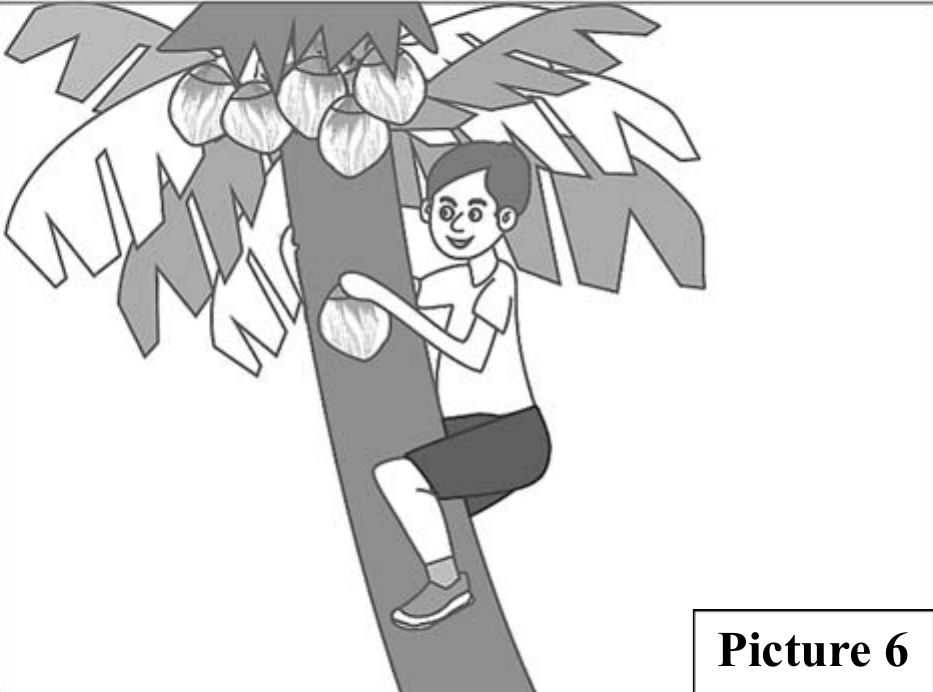
看逐字稿
question six, please look at picture six. Question six. Which two of the following are true about the boy in the picture? A, the boy is holding a coconut. B, The boy is wearing a hat. C. The boy is up in a tree. D. The boy is eating some fruit. For
中文翻譯
第六題,請看圖片六。第六題。關於圖片中的男孩,以下哪兩項敘述是正確的?A,男孩手裡拿著一顆椰子。B,男孩戴著一頂帽子。C,男孩在樹上。D,男孩正在吃水果。
第 7 題 (複選)
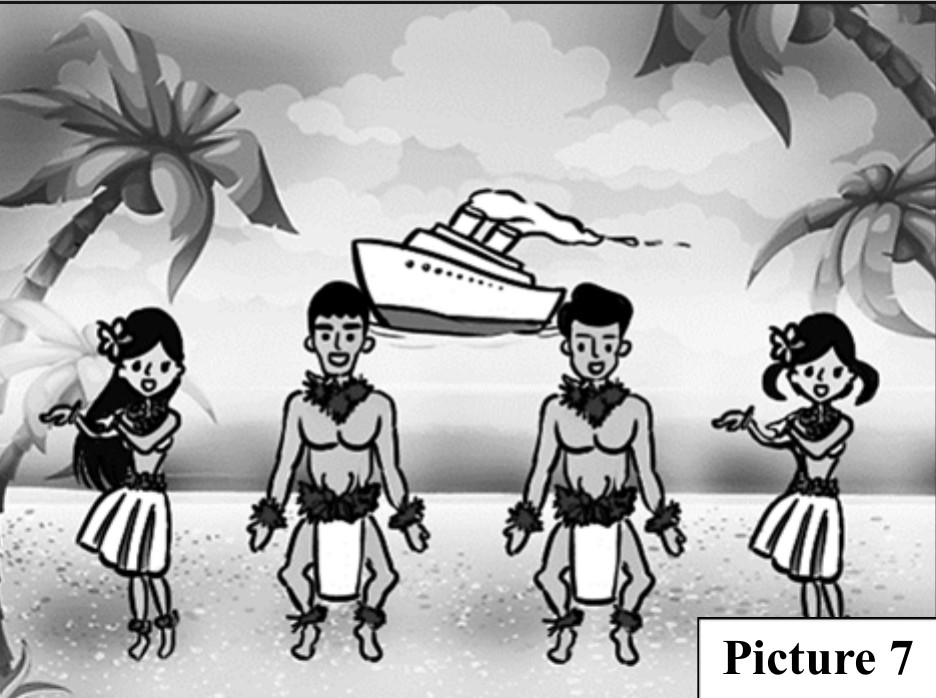
看逐字稿
question seven, please look at picture seven. Question seven. Which two of the following are true about the picture? A, two of the dancers are female. B, all the dancers wear flowers on their heads. C, they're dancing on the beach. D, the women are dancing in the middle. For question
中文翻譯
第七題,請看圖片七。第七題。關於這張圖片,以下哪兩個選項是正確的?A,有兩位舞者是女性。B,所有舞者頭上都戴著花。C,他們在沙灘上跳舞。D,女性舞者在中間跳舞。
第 8 題 (複選)
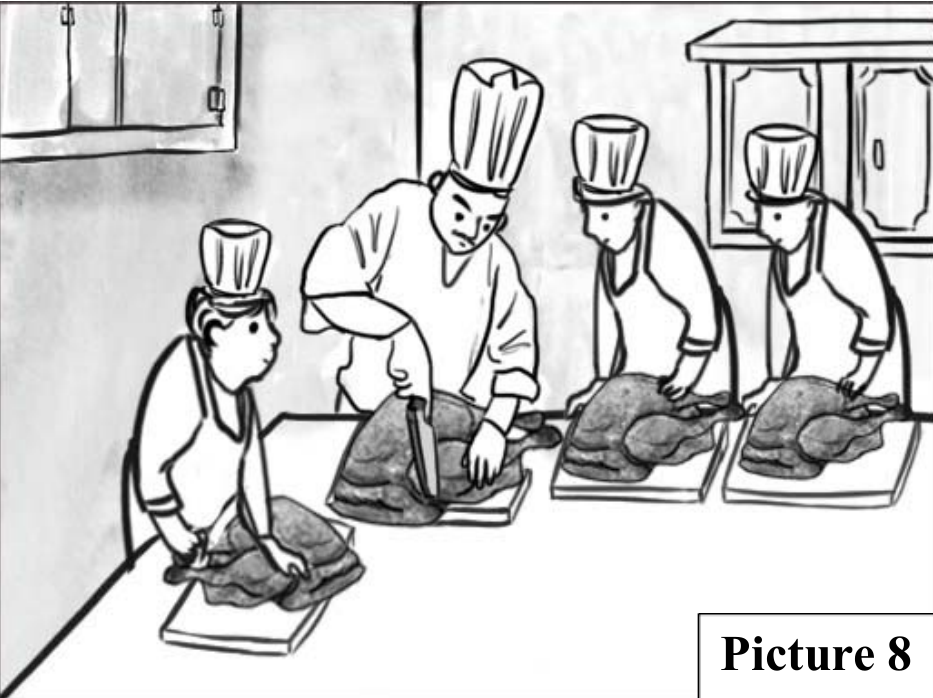
看逐字稿
eight, please look at picture eight. Question eight. Which two of the following are true about the students in the picture? A, they are putting their food into the oven. B, they are learning how to prepare fish. C, they are learning how to cut up a turkey. D. They are watching a teacher demonstrate something. For question
中文翻譯
第八題,請看圖片八。第八題。關於圖片中的學生,以下哪兩項說明是正確的?A,他們正把食物放進烤箱。B,他們正在學習如何處理魚。C,他們正在學習如何切火雞。D,他們正在觀看老師示範。關於問題
第 9 題 (複選)
看逐字稿
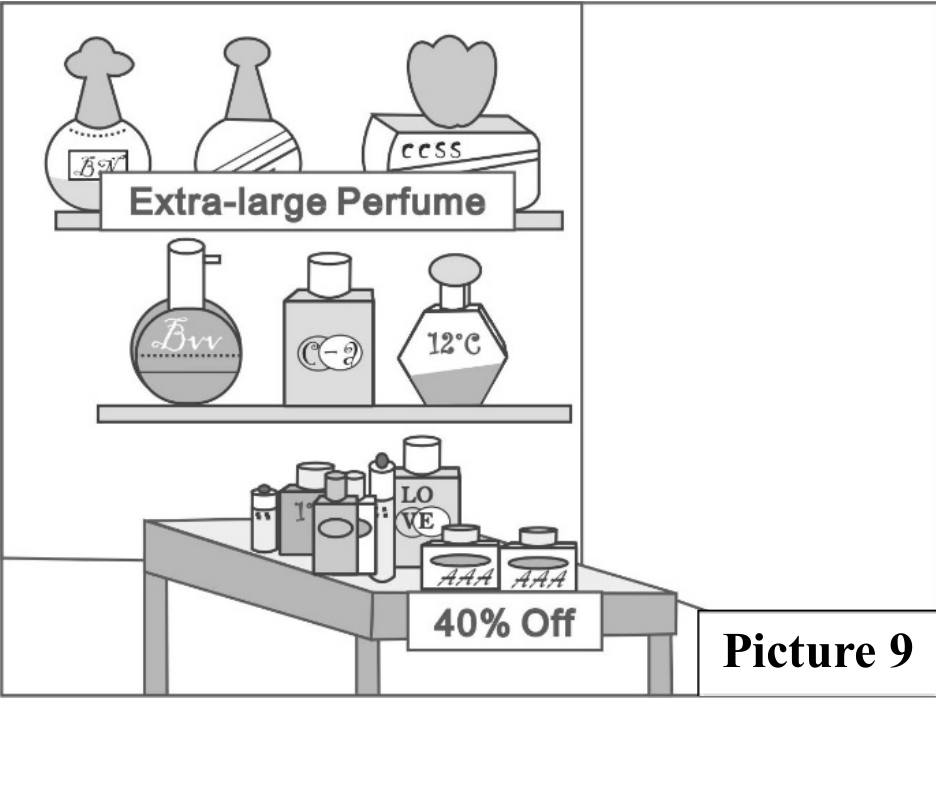
nine, please look at picture nine. Question nine. Which two of the following are true about the store in the picture? A, it has some discount items on sale. B, it has a buy one get one free promotion, c, it sells extra large bottles of perfume, d, it sells bottles of freshly squeezed juice. For
中文翻譯
第九題,請看圖片九。問題九。關於圖片中的商店,下列哪兩項描述是正確的?A,店內有一些特價商品正在促銷。B,店內有買一送一的優惠。C,店內有販售特大瓶的香水。D,店內有販售瓶裝的現榨果汁。
第 10 題 (複選)
看逐字稿
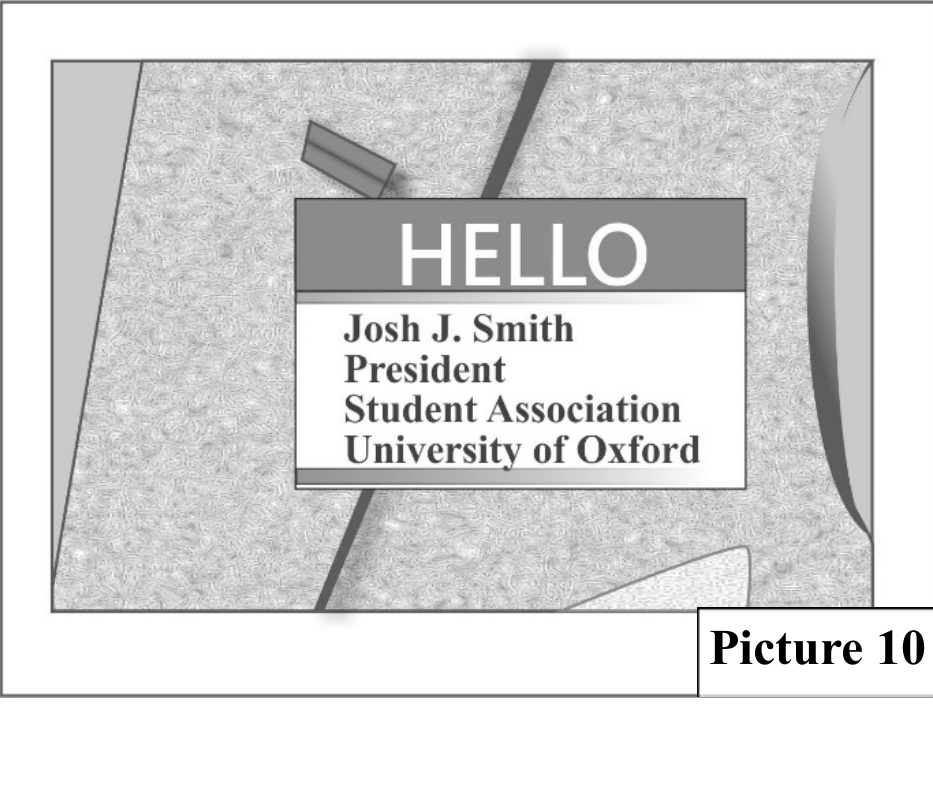
question 10, please look at picture 10. Question 10. Which two of the following can we learn from the name tag? A, mister Smith is a university professor. B, mister Smith is a college student. C, mister Smith is a leader of a student organization. D, mister Smith doesn't have a middle name.
中文翻譯
第 10 題,請看圖片 10。第 10 題。我們可以從這張名牌得知下列哪兩項資訊?A,史密斯先生是大學教授。B,史密斯先生是大學生。C,史密斯先生是學生組織的幹部。D,史密斯先生沒有中間名。
第三部分:對答
第 11 題
看逐字稿
Question 11. I was wondering where I can find a drugstore near here.
中文翻譯
第 11 題:我想請問這附近哪裡有藥局?
第 12 題
看逐字稿
Question 12. Do you want to go to the KTV with us this weekend?
中文翻譯
第 12 題。這週末你想和我們一起去 KTV 嗎?
第 13 題
看逐字稿
13. Excuse me. Are these your boots?
中文翻譯
13. 不好意思,這是您的靴子嗎?
第 14 題
看逐字稿
Question 14. I have a hard time reading this label. Can you see what it says?
中文翻譯
第 14 題。我看不清這張標籤。你看得清上面寫什麼嗎?
第 15 題
看逐字稿
Question 15. Can you give me a ride on your motorcycle?
中文翻譯
第 15 題:你可以騎機車載我一程嗎?
第 16 題
看逐字稿
16. We've been studying for two hours. Are you ready for a break?
中文翻譯
16. 我們已經讀了兩個小時的書,你想休息一下了嗎?
第 17 題
看逐字稿
Question 17. The bus is not here yet, but I'm afraid I need to go to the bathroom.
中文翻譯
第 17 題。公車還沒來,但我可能需要去上個廁所。
第 18 題
看逐字稿
18. I don't want to start an argument, but I really don't agree with you on this issue.
中文翻譯
18. 我不想引發爭執,但我真的不同意你在這個議題上的看法。
第 19 題
看逐字稿
Question 19. Look at the price tag. 20,000 NT dollars? Just for an ordinary looking jacket. That's really highway robbery.
中文翻譯
第 19 題。看看這個價格標籤。兩萬新台幣?買一件外表普普通通的夾克。那簡直是搶錢。
第 20 題
看逐字稿
Question 20. Do you think modern technology reduces or increases stress in our daily life?
中文翻譯
第 20 題。你認為現代科技是減少還是增加了我們日常生活中的壓力?
第四部分:簡短對話
第 21 題
看逐字稿
21, you'll listen to a short conversation. It would be cheaper to go by bus, wouldn't it? Definitely. But it would take hours longer, and we're only going to be there for one night. I guess so. We don't want to waste half the weekend sitting on a bus. Right. So let's treat ourselves and take the train. Question 21. Why does the couple decide to travel by train? For
中文翻譯
第 21 題,請聽一段簡短的對話。 「搭客運會比較便宜,不是嗎?」 「確實。但那會多花好幾個小時,而且我們只在那裡待一個晚上。」 「也是啦。我們不想把半個週末的時間浪費在坐客運上。」 「沒錯。所以我們犒賞自己一下,搭火車吧。」 第 21 題:這對情侶為什麼決定搭火車?
第 22 題
看逐字稿
question 22, you'll listen to a short conversation. I see you're using your own chopsticks. Yes. I always do these days. I keep them in my bag. I don't like using these disposable ones. Why not? What's wrong with them? For one thing, they're not environmentally friendly. You use them just once and then throw them away. It's such a waste. I think it's healthier to use my own too. At least I know they are clean. Question 22. What is the conversation mainly about? For
中文翻譯
第 22 題,請聽一段簡短的對話。 男:我看到妳用自己帶的筷子耶。 女:對啊,我最近都這樣,我都放在包包裡。我不喜歡用這種免洗筷。 男:為什麼?免洗筷有什麼不好嗎? 女:一來,它們很不環保。只用一次就丟掉,真的很浪費。而且我覺得用自己的筷子也比較健康,至少我知道它們是乾淨的。 第 22 題:這段對話主要在討論什麼?
第 23 題
看逐字稿
question 23, you'll listen to a short conversation. I couldn't stand being a dentist. Why not? It's a well paying job. I wish my salary were half as good as a dentist's. But who wants to spend all day looking in people's mouths? Oh, I can imagine worse ways to make a living. Look on the bright side. Some people do have beautiful teeth. Question 23. Which of the following is true about the conversation? For
中文翻譯
第 23 題,請聽一段簡短的對話。 女:我真受不了當牙醫。 男:為什麼?那是一份高薪的工作。我真希望我的薪水有牙醫的一半就好了。 女:但誰會想整天看著別人的嘴巴? 男:噢,我可以想像還有比這更糟的謀生方式。往好處想,有些人確實擁有漂亮的牙齒。 問題 23:關於這段對話,下列何者正確?
第 24 題
看逐字稿
question 24, you'll listen to a short conversation. Where should we go for our honeymoon? I'd like to go to Hawaii. It's beautiful there, and I love its culture. I know. But I spent two years working there. Can we go somewhere else, like Turkey? Hawaii is one of the world's hottest honeymoon destinations, and I've always wanted to go there. Okay. At least we don't need to hire a tour guide there. Question 24. What can be inferred from this conversation? For
中文翻譯
第 24 題,你將會聽到一段簡短的對話。 「我們的蜜月旅行該去哪裡呢?」 「我想去夏威夷。那裡很美,而且我很喜歡那裡的文化。」 「我知道。但我之前在那裡工作了兩年,我們能去別的地方嗎?像是土耳其?」 「夏威夷是全球最熱門的蜜月勝地之一,而且我一直都很想去那裡。」 「好吧。至少我們在那裡不需要請導遊。」 第 24 題。從這段對話中可以推論出什麼?
第 25 題
看逐字稿
questions twenty five and twenty six, you will listen to a conversation. Let's cross the road. There's a convenience store over there. Okay. What do you want to get? Just a drink. I'm really thirsty. Me too. I could do with a coffee. Hey, stop. Get back on the sidewalk. You can't cross the road here. Why not? What's wrong? You might get hit by a car or bus. In my country, it's called jaywalking. Unless you use a proper pedestrian crossing, you can get fined. Yeah. I think you're right. Let's take the pedestrian crossing there. Question 25. Where does this conversation take place? Question 26. Which of the following statements is true about the man? For
中文翻譯
第25題與第26題,你將會聆聽一段對話。我們過馬路吧。那裡有一家便利商店。好啊。你想買什麼?只是想買杯飲料。我真的很渴。我也是,我剛好也想喝杯咖啡。嘿,停下來!回到人行道上。你不能在這裡過馬路。為什麼不行?怎麼了嗎?你可能會被汽車或公車撞到。在我的國家,這叫做違規穿越馬路。除非你走專用的行人穿越道,否則會被罰款。對,我想你是對的。我們走那邊的行人穿越道吧。第25題。這段對話發生在什麼地方?第26題。關於這名男子,下列哪一項敘述是正確的?
第 26 題
看逐字稿
Question 26. Which of the following statements is true about the man? For questions twenty seven and twenty eight, you'll listen to a conversation. I'm so nervous about tomorrow's exam. Haven't you prepared for it? I'm really well prepared. The problem is I can't stop worrying, and it's making me physically sick. My stomach feels terrible. You need to relax, you know. I know, but I always feel this way before exams. You want me to relax, but it's easier said than done. I agree. I'm sorry. My suggestion wasn't very helpful. There's no need to apologize. You're right. I should calm down and take it easy. Well, if I were you, I'd go see a doctor or a school counselor. Yeah. I guess you are right.
中文翻譯
第 26 題。下列關於該男子的敘述何者正確?針對第 27 與 28 題,你將聆聽一段對話。我對明天的考試好緊張。你沒準備嗎?我準備得很好。問題是我就是忍不住一直擔心,緊張到身體都不舒服了。我的胃好難受。你得放鬆點,知道吧。我知道,但我考前總是這樣。你叫我放鬆,但這說得比做得容易。我同意。抱歉,我的建議沒什麼幫助。不需要道歉。你是對的,我應該冷靜下來,放輕鬆。好吧,如果我是你,我會去看醫生或找學校輔導老師。嗯,我想你說得對。
第 27 題
看逐字稿
questions twenty seven and twenty eight, you'll listen to a conversation. I'm so nervous about tomorrow's exam. Haven't you prepared for it? I'm really well prepared. The problem is I can't stop worrying, and it's making me physically sick. My stomach feels terrible. You need to relax, you know. I know, but I always feel this way before exams. You want me to relax, but it's easier said than done. I agree. I'm sorry. My suggestion wasn't very helpful. There's no need to apologize. You're right. I should calm down and take it easy. Well, if I were you, I'd go see a doctor or a school counselor. Yeah. I guess you are right. Question 27. Which of the following is true about the conversation? Question 28. Why does the woman apologize? For
中文翻譯
第 27 與 28 題,請聽以下對話。 「我對明天的考試好緊張。」 「你沒有準備嗎?」 「我準備得很充分。問題是我忍不住一直擔心,甚至緊張到身體不舒服,胃好痛。」 「你知道的,你需要放鬆一下。」 「我知道,但我考試前總是這樣。妳要我放鬆,但說得倒容易,做起來很難。」 「我同意。對不起,我的建議好像沒什麼幫助。」 「不用道歉啦。妳說得對,我應該冷靜下來,放輕鬆。」 「嗯,如果我是你,我會去看醫生或找學校的輔導老師。」 「對啊,我想妳說得沒錯。」 第 27 題。關於這段對話,下列敘述何者正確? 第 28 題。這位女士為什麼道歉?因為...
第 28 題
看逐字稿
Question 28. Why does the woman apologize? For questions twenty nine and thirty, you'll listen to a conversation. Did you wear a uniform to school when you were in high school? Yes. I did. Gee. We didn't do that when we were in high school. Personally, I think it's a good thing to wear a uniform. Why is that? Well, by having uniforms, we didn't have to waste time thinking about what to wear for the day. It was easier for our parents too because they could save some money on clothes. But we think differently in our school. We believe it helps students to develop creativity when they get to choose what to wear. In addition, it helps build up their individuality when they show up at school not looking like everybody else. It's also a good way to help them learn how to make decisions for themselves. Yeah. That makes sense too.
中文翻譯
第 28 題。為什麼這位女士要道歉?針對第 29 題與第 30 題,你將會聽到一段對話。你高中的時候上學有穿制服嗎?有啊,我有穿。天啊,我們高中的時候不用穿。我個人覺得穿制服是一件好事。為什麼呢?這個嘛,因為有制服,我們就不用浪費時間思考當天要穿什麼。對我們的父母來說也比較省事,因為他們可以省下一些買衣服的錢。但我們學校的想法不同。我們認為讓學生自己選擇要穿什麼,有助於培養他們的創造力。此外,當他們去學校時看起來跟別人不一樣,也有助於建立他們的個人特質。這也是一個幫助他們學習如何為自己做決定的好方法。對,那樣說也很有道理。
第 29 題
看逐字稿
questions twenty nine and thirty, you'll listen to a conversation. Did you wear a uniform to school when you were in high school? Yes. I did. Gee. We didn't do that when we were in high school. Personally, I think it's a good thing to wear a uniform. Why is that? Well, by having uniforms, we didn't have to waste time thinking about what to wear for the day. It was easier for our parents too because they could save some money on clothes. But we think differently in our school. We believe it helps students to develop creativity when they get to choose what to wear. In addition, it helps build up their individuality when they show up at school not looking like everybody else. It's also a good way to help them learn how to make decisions for themselves. Yeah. That makes sense too. Question 29. What does the woman like about having uniforms? Question 30. What is not mentioned by the man as an advantage of not wearing uniforms?
中文翻譯
第29與30題,請聽以下對話。你高中的時候有穿制服上學嗎?有啊,我有穿。天啊,我們高中的時候不用穿。但我個人覺得穿制服是件好事。為什麼呢?嗯,因為有制服,我們就不用浪費時間思考每天要穿什麼。對我們的父母來說也比較輕鬆,因為可以省下一些買衣服的錢。但我們學校的想法不同。我們認為讓學生自己選擇穿什麼,有助於培養創造力。此外,當他們上學時看起來跟其他人不一樣,這也有助於建立他們的個人特質。這也是幫助他們學習如何為自己做決定的好方法。對,那樣說也很有道理。第29題:這位女士喜歡穿制服的哪一點?第30題:關於不穿制服的好處,哪一項是這位男士沒有提到的?
第 30 題
看逐字稿
Question 30. What is not mentioned by the man as an advantage of not wearing uniforms? The sample question is based on the following report. Wonderland is perhaps the most popular vacation spot for families. It attracts tourists and provides jobs for the local residents in its hotels and shopping malls. But now it is called the tragic Kingdom. The neighbors suffer from traffic jams that last for miles, and it takes hours to park the car. Empty cans, bottles, and garbage are everywhere. The whole place is becoming polluted. Most of all, prices of goods are skyrocketing. People pay more for living here. Questions thirty one and thirty two are based on the following report. Many school districts in The United States have begun to provide their students with tablet computers. But simply providing every student with a tablet, although novel and exciting, will not automatically lead to higher achievement. Tablets are great for learning, but they are equally good at distracting students. The temptation to play a quick game or check your messages every few minutes can be overwhelming. Then, there are a number of practical issues. Unlike traditional books, tablets need charging. In a classroom of 20 or 30 students, there will always be one or two who forgot to charge their device's battery the previous night. And what happens to the lesson when the Wi Fi server is slow or disconnected? No one is saying that tablet computers don't have their advantages, but it's unrealistic to argue that they are perfect. Questions thirty three and thirty four are based on the following talk. Good morning, and welcome. The main focus of this class is to develop your English presentation skills. The opportunity to give presentations on a variety of topics will help you improve your ability to express yourself clearly. We are going to focus on three important elements of effective presentations. Firstly, using body language to improve communication. Secondly, using visuals more effectively in PowerPoint presentations. And finally, learning how to speak with confidence by getting used to expressing yourself in front of others. If you can master these skills, you'll be able to communicate effectively in an increasingly globalized world. For those planning on participating in the study abroad program next year, you'll find yourself well prepared for the challenges ahead. Questions thirty five and thirty six are based on the following report. New technologies have had a great impact on the way people watch television. Video on demand services, which allow viewers to watch what they want when they want, are gaining millions of new customers every year. The difficulty for video on demand services in the past was that you could only watch their programs on a computer. This wasn't ideal for families who wanted to watch programs or movies together. But these days, it is a relatively simple matter to wirelessly hook up a TV to your computer. However, there are still challenges. One of these challenges is download speeds. Low download speeds often affect the quality of the picture, especially when using more than one device. But the challenges are being met, so who knows how we'll be watching television in ten or twenty years' time? Questions thirty seven and thirty eight are based on the following talk. What's the point of studying history? Millions of schoolchildren have asked themselves this question. It's all in the past. Why do I need to know this stuff? Well, history, knowing and understanding what happened in the past, can help us make better decisions. We can learn valuable lessons from past mistakes, lessons that may help us avoid repeating them. History can also be inspiring. Knowing what people have achieved in the past, might motivate us to succeed and achieve our goals too. And history teaches us to ask why and how, as well as what and when. These important questions sharpen our critical thinking abilities, helping us to solve problems and form arguments. Questions thirty nine and forty are based on the following talk. Cars cause traffic jams. Cars cause pollution. Cars are expensive to run. It's easy for us to be critical of cars, but what would life be like without them? Cars increase mobility. Without cars, it would be difficult for many people to get to work, especially those who don't live in big cities with good public transport systems. People would have far fewer opportunities if they were forced to work locally. It's the same with shopping. Just imagine how limited the options would be if you could only shop at stores close to your home. And what about recreation? It wouldn't be so easy to get away to visit beaches, mountains, and lakes if you had to rely on public transport. So there are two sides to every story. Yes, cars cause congestion, pollution, and are expensive, but it would be wrong to forget the big benefits they offer. This is the end of the listening comprehension test.
中文翻譯
第 30 題:男子沒有提到哪一項作為不穿制服的好處?本範例問題是根據以下報導。萬德蘭(Wonderland)也許是最受家庭歡迎的度假勝地。它吸引了觀光客,並在其飯店和購物中心為當地居民提供工作機會。但現在它被稱為「悲劇王國」。鄰近居民飽受延綿數英里的塞車之苦,而且停車要花上好幾個小時。空罐、瓶子和垃圾隨處可見。整個地方正變得受到污染。最糟糕的是,物價飛漲。住在這的人要付出更高的生活開銷。 第 31 題和第 32 題是根據以下報導。美國的許多學區已開始為學生提供平板電腦。然而,僅僅為每位學生提供一台平板電腦,雖然新奇且令人興奮,並不會自動帶來更高的學業成就。平板電腦非常適合學習,但也同樣容易分散學生的注意力。每隔幾分鐘就想玩個快速遊戲或查看訊息的誘惑可能是無法抗拒的。此外,還有一些實際的問題。與傳統書籍不同,平板電腦需要充電。在一個有 20 或 30 名學生的班級中,總會有一兩個學生在前一天晚上忘記給設備充電。而當 Wi-Fi 伺服器變慢或斷線時,課程會受到什麼影響?沒有人說平板電腦沒有優點,但若認為它們是完美的,那就不切實際了。 第 33 題和第 34 題是根據以下演講。早上好,歡迎大家。這門課的主要焦點是培養你們的英語簡報技巧。針對各種主題進行簡報的機會,將有助於提高你們清晰表達自己的能力。我們將專注於有效簡報的三個重要元素。首先,利用肢體語言來改善溝通。其次,在 PowerPoint 簡報中更有效地使用視覺效果。最後,透過習慣在他人面前表達自己,學習如何充滿自信地說話。如果你能掌握 these 技巧,你將能夠在日益全球化的世界中進行有效的溝通。對於那些計劃明年參加海外留學計畫的人來說,你們會發現自己已為未來的挑戰做好充分準備。 第 35 題和第 36 題是根據以下報導。新技術對人們看電視的方式產生了巨大的影響。隨選視訊服務允許觀眾在他們想看的時候看他們想看的內容,每年都吸引數百萬新客戶。過去隨選視訊服務的困難在於,你只能在電腦上觀看他們的節目。對於想要一起看節目或電影的家庭來說,這並不理想。但現在,將電視無線連接到電腦是一件相對簡單的事情。然而,挑戰依然存在。其中一個挑戰是下載速度。低下載速度通常會影響畫面品質,尤其是在使用多個裝置時。但這些挑戰正在被克服,所以誰知道十或二十年後我們將如何看電視呢? 第 37 題和第 38 題是根據以下演講。研究歷史有什麼意義?數百萬學童都曾問過自己這個問題。這都是過去的事了。為什麼我需要知道這些?嗯,歷史,也就是了解和明白過去發生的事情,可以幫助我們做出更好的決定。我們可以從過去的錯誤中吸取寶貴的教訓,這些教訓可能有助於我們避免重蹈覆轍。歷史也可以具有啟發性。了解人們過去取得的成就,可能會激勵我們去爭取成功並實現我們的目標。而且歷史教會我們詢問為什麼和如何,以及是什麼和何時。這些重要的問題能磨練我們的批判性思考能力,幫助我們解決問題並建立論點。 第 39 題和第 40 題是根據以下演講。汽車會造成交通堵塞。汽車會造成污染。汽車的運行費用昂貴。我們很容易對汽車持批評態度,但沒有汽車的生活會是什麼樣子呢?汽車提高了移動性。如果沒有汽車,許多人將很難去上班,特別是那些不住在公共運輸系統發達的大城市的人。如果被迫在當地工作,人們的機會就會少得多。購物也是一樣。想像一下,如果你只能在離家近的商店購物,選擇會有多麼有限。那娛樂呢?如果你必須依賴大眾運輸工具,那麼去海灘、山區和湖泊旅遊就沒那麼容易了。所以每件事都有兩面。是的,汽車會造成擁堵、污染,而且費用昂貴,但如果忘記它們帶來的巨大好處就錯了。聽力測驗到此結束。
第五部分:短文聽解
第 31 題
What is the speaker’s main point about tablet computers?
看逐字稿
Questions thirty one and thirty two are based on the following report. Many school districts in The United States have begun to provide their students with tablet computers. But simply providing every student with a tablet, although novel and exciting, will not automatically lead to higher achievement. Tablets are great for learning, but they are equally good at distracting students. The temptation to play a quick game or check your messages every few minutes can be overwhelming. Then, there are a number of practical issues. Unlike traditional books, tablets need charging. In a classroom of 20 or 30 students, there will always be one or two who forgot to charge their device's battery the previous night. And what happens to the lesson when the Wi Fi server is slow or disconnected? No one is saying that tablet computers don't have their advantages, but it's unrealistic to argue that they are perfect.
中文翻譯
第三十一題與三十二題是根據以下報導。美國許多學區已開始為學生提供平板電腦。然而,僅僅提供每位學生一台平板電腦,雖然新奇且令人興奮,但並不會自動帶來更高的學業成就。平板電腦非常適合學習,但它們也同樣容易分散學生的注意力。每隔幾分鐘就想玩個小遊戲或查看訊息的誘惑,可能會讓人無法抗拒。此外,還有一些實際性的問題。與傳統書籍不同,平板電腦需要充電。在一個有二十或三十名學生的教室裡,總會有一兩個人前一天晚上忘記給設備充電。當 Wi-Fi 伺服器變慢或斷線時,課堂教學又該如何進行?沒有人說平板電腦沒有優點,但若認為它們是完美的,那就不切實際了。
第 32 題
What problem is NOT mentioned in the report?
看逐字稿
(Shared talk with Q31 — read the printed stem; no separate spoken question prompt. The talk audio plays once on the group clip.)
中文翻譯
(與第 31 題共用對話——請閱讀考卷上的題幹;無單獨的口頭提問。該對話音檔在該群組中播放一次。)
第 33 題
What is the main purpose of this talk?
看逐字稿
Questions thirty three and thirty four are based on the following talk. Good morning, and welcome. The main focus of this class is to develop your English presentation skills. The opportunity to give presentations on a variety of topics will help you improve your ability to express yourself clearly. We are going to focus on three important elements of effective presentations. Firstly, using body language to improve communication. Secondly, using visuals more effectively in PowerPoint presentations. And finally, learning how to speak with confidence by getting used to expressing yourself in front of others. If you can master these skills, you'll be able to communicate effectively in an increasingly globalized world. For those planning on participating in the study abroad program next year, you'll find yourself well prepared for the challenges ahead.
中文翻譯
第 33 及 34 題是根據以下這段話。大家早,歡迎你們。這門課的主要焦點是培養大家的英文簡報技巧。針對各種不同主題進行簡報的機會,將能幫助你們提升清晰表達自我的能力。我們將著重於成功簡報的三個重要要素。第一,利用肢體語言來改善溝通。第二,在 PowerPoint 簡報中更有效地運用視覺效果。最後,透過習慣在眾人面前表達自我,來學習如何充滿自信地說話。若能掌握這些技巧,你們將能在此日益全球化的世界中進行有效的溝通。對於計畫明年參加海外留學計畫的同學,你們會發現自己已為未來的挑戰做好充分準備。
第 34 題
According to the speaker, how can one build up self-confidence in speaking?
看逐字稿
(Shared talk with Q33 — read the printed stem; no separate spoken question prompt. The talk audio plays once on the group clip.)
中文翻譯
(與第 33 題共用語音內容——請閱讀紙本題幹;無單獨的口語提問。該語音於題組中播放一次。)
第 35 題
What is the main point of the report?
看逐字稿
thirty five and thirty six are based on the following report. New technologies have had a great impact on the way people watch television. Video on demand services, which allow viewers to watch what they want when they want, are gaining millions of new customers every year. The difficulty for video on demand services in the past was that you could only watch their programs on a computer. This wasn't ideal for families who wanted to watch programs or movies together. But these days, it is a relatively simple matter to wirelessly hook up a TV to your computer. However, there are still challenges. One of these challenges is download speeds. Low download speeds often affect the quality of the picture, especially when using more than one device. But the challenges are being met, so who knows how we'll be watching television in ten or twenty years' time?
中文翻譯
第35題與第36題是根據以下報導。新科技對人們看電視的方式產生了巨大的影響。隨選視訊服務能讓觀眾在想看的時候看想看的節目,每年都吸引數百萬名新客戶。過去隨選視訊服務的難處在於,你只能在電腦上觀看他們的節目。這對於想要一起看節目或電影的家庭來說並不理想。但如今,將電視無線連接到電腦已是件相對簡單的事。然而,挑戰依然存在。其中一個挑戰是下載速度。慢速的下載往往會影響畫質,尤其是在使用多個裝置時。但這些挑戰正被逐步克服,所以誰知道十年或二十年後,我們會用什麼方式看電視呢?
第 36 題
According to the report, what can viewers do with video-on-demand technology?
看逐字稿
(Shared talk with Q35 — read the printed stem; no separate spoken question prompt. The talk audio plays once on the group clip.)
中文翻譯
(與第 35 題共用談話內容——請閱讀紙本題幹;無單獨的口頭問題提示。該談話音檔在群組剪輯中僅播放一次。)
第 37 題
What is the talk mainly about?
看逐字稿
thirty seven and thirty eight are based on the following talk. What's the point of studying history? Millions of schoolchildren have asked themselves this question. It's all in the past. Why do I need to know this stuff? Well, history, knowing and understanding what happened in the past, can help us make better decisions. We can learn valuable lessons from past mistakes, lessons that may help us avoid repeating them. History can also be inspiring. Knowing what people have achieved in the past, might motivate us to succeed and achieve our goals too. And history teaches us to ask why and how, as well as what and when. These important questions sharpen our critical thinking abilities, helping us to solve problems and form arguments.
中文翻譯
第37題與第38題是根據以下這段演講。學習歷史有什麼意義?成千上萬的學童都曾問過自己這個問題。那些都是過去的事了,為什麼我需要知道這些?嗯,歷史——也就是認識並理解過去發生的事情——能幫助我們做出更好的決定。我們可以從過去的錯誤中吸取寶貴的教訓,這些教訓可能有助於我們避免重蹈覆轍。歷史也能帶來啟發。了解人們過去所取得的成就,可能會激勵我們去取得成功並實現目標。此外,歷史教會我們不僅要問「是什麼」和「在何時」,還要探究「為什麼」和「如何」。這些重要的問題能磨練我們的批判性思考能力,幫助我們解決問題並建立論點。
第 38 題
Which of the following is NOT mentioned as a reason for studying history?
看逐字稿
(Shared talk with Q37 — read the printed stem; no separate spoken question prompt. The talk audio plays once on the group clip.)
中文翻譯
(與第 37 題共用談話內容——請閱讀紙本題幹;無單獨的口語問題提示。該談話音檔在題組中僅播放一次。)
第 39 題
What is the main point of the talk?
看逐字稿
Questions thirty nine and forty are based on the following talk. Cars cause traffic jams. Cars cause pollution. Cars are expensive to run. It's easy for us to be critical of cars, but what would life be like without them? Cars increase mobility. Without cars, it would be difficult for many people to get to work, especially those who don't live in big cities with good public transport systems. People would have far fewer opportunities if they were forced to work locally. It's the same with shopping. Just imagine how limited the options would be if you could only shop at stores close to your home. And what about recreation? It wouldn't be so easy to get away to visit beaches, mountains, and lakes if you had to rely on public transport. So there are two sides to every story. Yes, cars cause congestion, pollution, and are expensive, but it would be wrong to forget the big benefits they offer. This is the end of the listening comprehension test.
中文翻譯
第39題與第40題是根據以下這段談話。汽車會造成交通壅塞。汽車會造成污染。養車的開銷很大。我們很容易對汽車持批評態度,但如果沒有汽車,生活會變成怎樣?汽車提高了移動便利性。如果沒有汽車,許多人將很難去上班,特別是那些沒有住在擁有完善大眾運輸系統的大城市裡的人。如果被迫只能在當地工作,人們的機會將會少得多。購物也是一樣。試想一下,如果只能在離家近的商店買東西,選擇會有多麼有限。那休閒娛樂呢?如果必須依賴大眾運輸,要去海灘、山區和湖泊出遊就沒那麼容易了。因此,凡事都有兩面。是的,汽車會造成擁擠、污染,而且花費高昂,但若忽略它們帶來的巨大好處就錯了。聽力測驗到此結束。
第 40 題
According to the talk, which of the following is an advantage of cars?
看逐字稿
(Shared talk with Q39 — read the printed stem; no separate spoken question prompt. The talk audio plays once on the group clip.)
中文翻譯
(與第 39 題共用談話文本——請閱讀印出的題幹;無單獨的口頭問題提示。談話錄音在組合片段中僅播放一次。)